
Our paper is finally out.
We examined whether Socio-Economic Indexes for Areas (paricularly, the Index of Relative Socioeconomic Disadvantage – IRSD) should be based on a more locally sensitve indicator, in contrast to the existing national and state-based rankings. This aims to develop more suitable rankings, esp. for regional areas.
Please see our article in the Journal of Australian Population Studies.
Blog
Python for Medication Adherence
Chronic diseases have a widespread impact on health outcomes and medication adherence is one main factor to improve the health status. Based on medical claims data hold by medical insurers or management services, adherence patterns of members with chronic diseases, such as type2 diabetes or cardiovascular disease can be identified based on their diagnosis claims (ICD codes), and related prescription claims with their days-of-supply information for fills of a given drug in a particular time period. Assessing these prescription claims, the adherence to a specific drug or drug-class can then be calculated through the proportion of days covered (pdc).
We generated a python based programming solution, computing pdc medical adherence on a patient basis, per drug and per year. The data is plotted using the python library bokeh – also allowing for the generation of interactive displays (bokeh server). Some outputs are shown below.

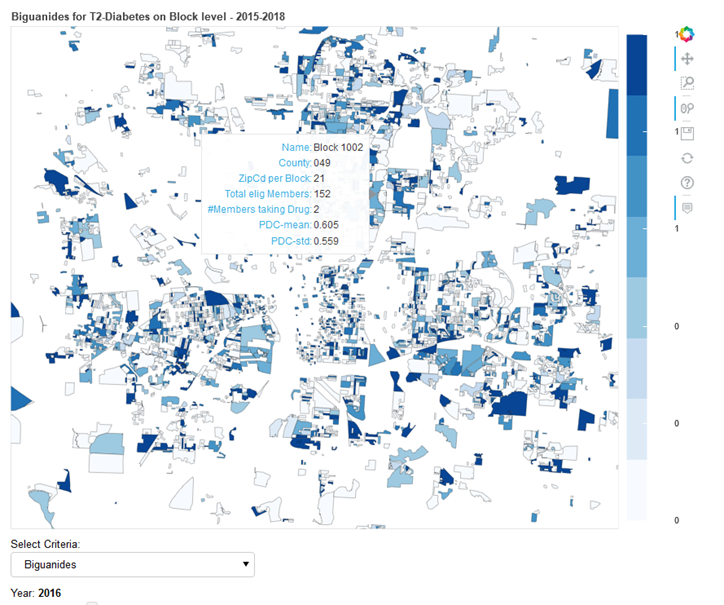
Further, python bokeh is employed for producing a web-based interactive map output, illustrating aggregated medical adherence data (pdc) per drug-class on a census unit level: The application below enables the user to select a specific drug-class, and setting the year of analysis with the time-slider.
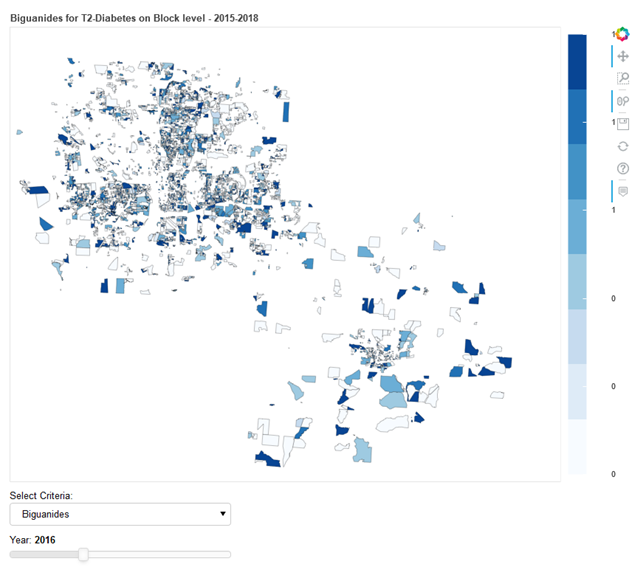
Zoom into the feature map is possible, and census units reveal feature information when hovering over.
Great Artesian Basin Model
We have created a 3D Model of the Great Artesian Basin (GAB), based on 10 hydrostratigraphic formations- 6 Aquifer and 4 Aquitard units – using open-source tools such as paraview; see this link – on our website.
Suitability assessment – native fish hatchery – VFA
Spatial Ventures conducted an environmental and groundwater suitability study – for the establishment of a fish hatchery in Northern Victoria.
A project the Victorian State Government is keen to get finalised under the guidance of the Victorian Fisheries Authority.
See also under https://vfa.vic.gov.au/about/media-releases/exploring-native-fish-hatchery-sites
…and latest updates under https://vfa.vic.gov.au/recreational-fishing/targetonemillion2/new-native-fish-hatchery
Launch of “Afghan Geo-Portal” – ADB, March 2018
Adb announced the launch of the Afghan GeoPortal in Kabul, Afghanistan.
Initially, Spatial Ventures’ national GIS feasibility study had been a first step to leading to this result.
See the announcement here.
Coral Sea Natural Park – Management Plan approved
The Management Committee in New Caledonia approved the management plan of the Coral Sea Park (28/02/2018).
The 2018/19 agenda includes the designation of several MPAs around pristine reef & seamounts as well as a tourism policy design.
Spatial Ventures supported Conservation International and the French Marine Protected Area Agency producing geomorphology mapping, benthic environment and habitat/biologic classifications.
More information about the park can be found under the link
https://mer-de-corail.gouv.nc/en/, including an overview of the area.
The Coral Sea Management plan is found here.
Openlayers 4 – Parametric View
Openlayers 4 – a parametric view is defined in Geoserver, and flitered in Openlayers through javascript – filter parameters are retrieved through an Ajax request querying the source layer in Postgres/Postgis. The layer is refined and point locations are returned and displayed. In addition, on-click events trigger retrieval of point attributes based on GeoJson.
A corresponding bounding-box is returned through an additional Postgis request, querying st_extent of the features’ geometries.
See:
Sept 2017: Afghanistan Launch New GIS Policies to Improve Geospatial Data | Asian Development Bank
The Afghan Government agreed on new policies on the use of geospatial data – the launch date was 6th September 2017.
https://www.adb.org/news/adb-afghanistan-launch-new-gis-policies-improve-geospatial-data
This process is in-line with a larger project establishing a GIS online system across government and other institutional sectors – initially supported by Spatial Ventures and Alcis (UK) through a feasibility study and needs assessment for implementing a GIS-based information platform.
Drone training New Caledonia
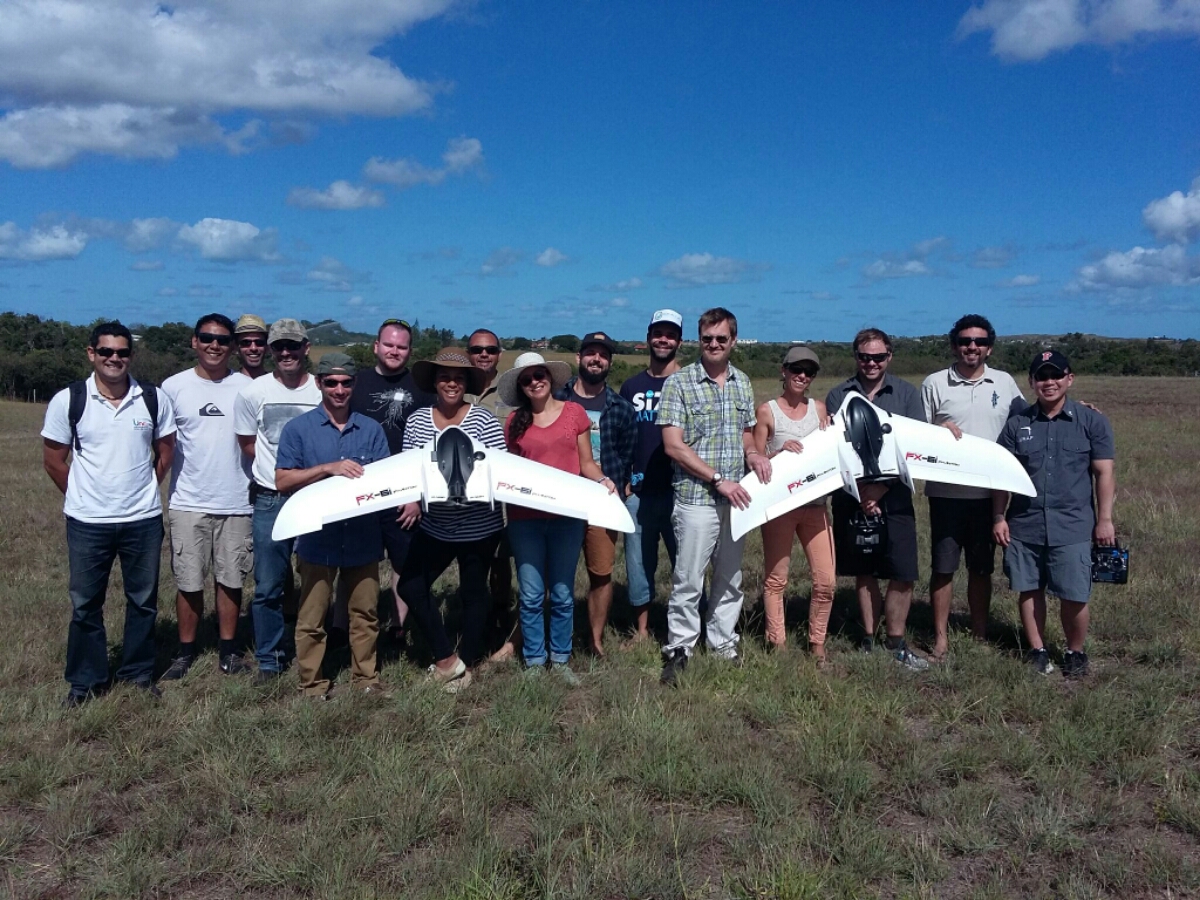
This was great opportunity in October this year to understand the principles of operating fixed wings and copters with Uni Adelaide and CI. Also the insight of associated data lifecycle was interesting to go through. Overall, a nice option for monitoring the landcover and observing conservation related issues/outcomes.
Misconceptions about UAV-collected NDVI imagery…
Great article on vegetation indices developed from drone imagery